Tool shop: how to choose the right one for your workshop?
What should a good tool shop offer?
Choosing the right tool shop is a decision that directly affects how efficiently your workshop runs and how safe it is for its users. Whether you run a professional car service centre, a mechanical workshop or a small craft business, the quality of the tools and the terms of purchase are of key importance.
A good tool shop should have a few basic characteristics. Above all, it offers a wide range of products from proven manufacturers, provides professional technical advice and guarantees favourable terms for business customers. Product availability, fast order fulfilment and comprehensive after-sales service are just as important.
Differences between B2B and B2C offers
Tool shops can be divided into two main categories. A B2C (business to consumer) offer is aimed at individual customers and often focuses on hobby and semi-professional tools. B2B (business to business) shops, on the other hand, specialise in supplying companies, offering professional tools, the option of bulk purchasing and dedicated pricing terms.
For workshop owners, working with a shop that offers B2B solutions is of key importance. Such a partnership provides not only more attractive prices on larger orders, but also access to specialist equipment that meets the highest industrial standards.
Which tools are essential in a professional workshop?
Fully equipping a workshop requires a well-thought-out approach to choosing tools. The basic set may differ depending on your specialisation, but there are product categories that are universal for most mechanical and industrial workshops.
Basic hand tools
Every tool shop should offer a comprehensive choice of hand tools. This category includes open-ended and ring spanners, torque wrenches, screwdrivers with various bits, pliers, grips and hammers. The quality of these products translates directly into the precision of your work and the durability of the tools.
A professional workshop also needs socket sets in various sizes, hex keys and specialist tools for specific applications. It is worth choosing products with quality certificates and a manufacturer's warranty, which ensures a long service life without the need for frequent replacement.
Power tools and powered equipment
A modern workshop cannot function without power tools. Drills, cordless drivers, angle grinders, saws and pneumatic tools significantly speed up many operations. A good tool shop offers equipment in both corded and cordless versions, suited to different applications.
When choosing power tools, the key factors are technical parameters such as power, torque, battery run time and the availability of spare parts. It is also worth paying attention to battery systems: choosing a single battery platform compatible with many devices from the same manufacturer can significantly reduce running costs.
Organising tools in the workshop: the foundation of efficient work
Even the best tools will not guarantee efficiency if they are not properly organised. Professional workshop equipment should include not only the tools themselves, but also systems for storing and organising them.
Tool cabinets and workshop trolleys
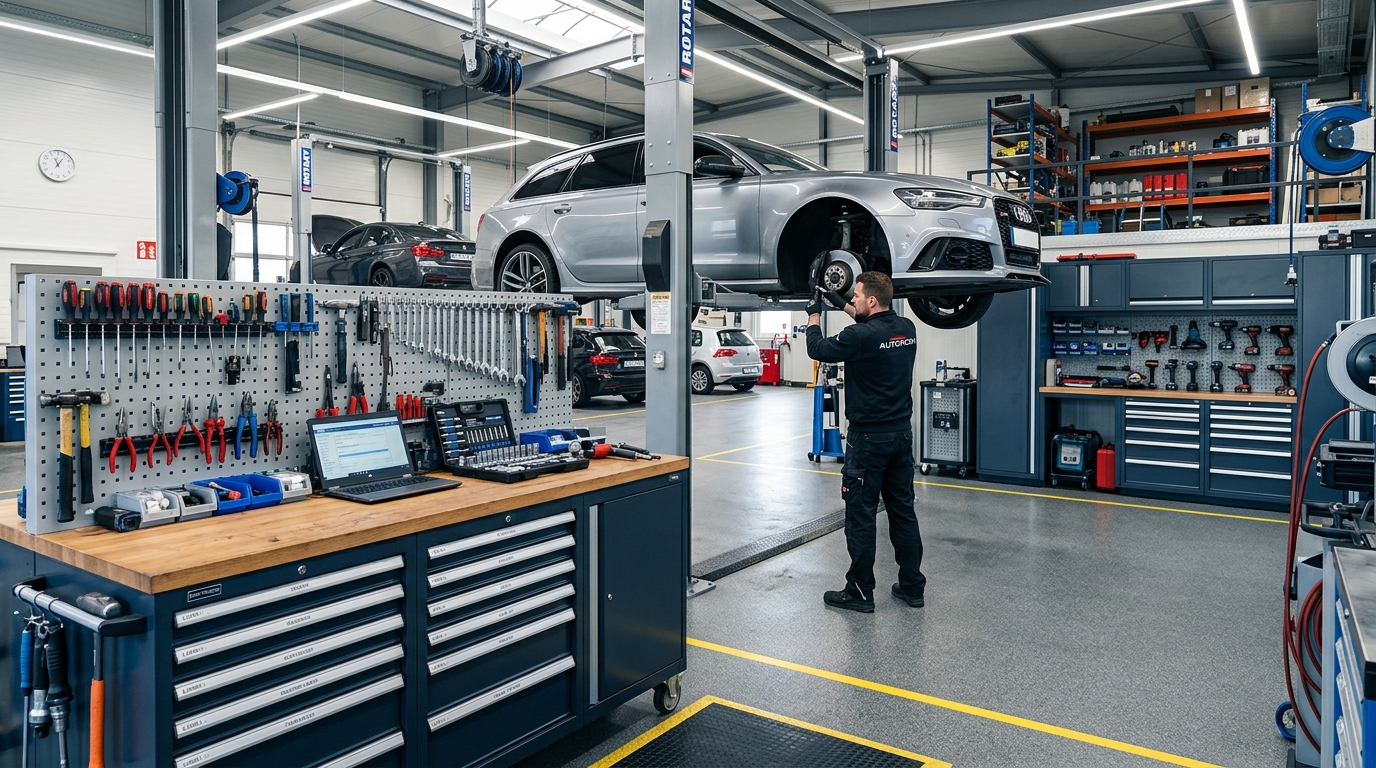
Every professional tool shop should include workshop furniture in its range. Tool trolleys with drawers, tool cabinets and wall panels are the basis of an ergonomic work space. They give easy access to the tools you need, minimise the time spent searching and protect equipment from damage.
High-quality workshop furniture should have a sturdy construction, resistance to loads and a locking system that protects against theft. Many professional solutions also offer the option of expanding the system in a modular way as the workshop grows.
Marking and identification systems
In larger workshops, where several people use the tools, a system for identifying and controlling equipment is essential. Tool marking, foam inserts cut to fit specific tools and electronic asset management systems help keep things in order and prevent valuable equipment from going missing.
Criteria for choosing a tool shop for businesses
When deciding on regular cooperation with a tool shop, it is worth paying attention to a few key aspects that determine the quality of service and the terms of purchase.
Range and product availability
A comprehensive tool shop should offer products from different categories, from basic hand tools and power tools to workshop equipment and health and safety supplies. A wide range allows you to meet most of your needs in one place, which saves time and often transport costs too.
Constant product availability is just as important. Professional shops keep suitable stock levels of key items, which guarantees fast order fulfilment even for urgent needs.
Technical support and advice
The best tool shops do not limit themselves to selling products; they also offer professional technical advice. Knowledgeable staff should be able to help you choose the right tools for specific applications, advise on technical parameters and propose the best solutions within your available budget.
Commercial terms for business customers
Shops focused on serving businesses should offer flexible payment terms, the option of buying on VAT invoices with deferred payment, and discounts on larger orders. Loyalty programmes and dedicated offers for regular customers are additional benefits that are valuable for the growth of a workshop.
Safety and certification: what to look out for
When choosing a tool shop, always check whether the products on offer have the appropriate certificates and approvals. Professional tools should meet European standards marked with the CE symbol and, in the case of electrical equipment, additional safety requirements.
This is particularly important for tools used in industrial conditions, where faulty or poor-quality equipment can endanger the health and lives of employees. A reputable tool shop always makes full technical documentation and certificates available for the products it offers.
Trends in the tool industry: where is the market heading?
The tool market is developing dynamically, and tool shops must keep up with customers' changing needs. We are currently seeing several clear trends shaping the industry.
Electrification and cordless technology
More and more manufacturers are investing in extensive battery systems that allow a single type of battery to be used across many different tools. This standardisation not only lowers costs, but also increases mobility and flexibility of work in the workshop.
Digitalisation and smart tools
Modern tools are fitted with electronic torque control systems and Bluetooth connectivity that allows work parameters to be monitored and integrated with workshop management systems. Tool shops are gradually introducing such solutions into their range, which improve precision and document the work process.
Ecology and sustainability
Growing environmental awareness is also affecting the tool industry. Manufacturers are focusing on energy-efficient solutions, recycled materials and designing tools for ease of repair and longevity. A professional tool shop increasingly also offers programmes for exchanging used batteries and recycling old equipment.
Summary: how to find your tool supplier?
Choosing the right tool shop is an investment in the long-term development of your workshop. The key to success is finding a partner that not only offers a wide range and competitive prices, but also provides professional support, flexible terms of cooperation and products of the highest quality.
Before making a decision, it is worth comparing the offers of several suppliers, paying attention to the opinions of other workshops and testing the quality of service. Remember that a good tool shop is not just a place to buy things, but above all an adviser and partner in your everyday workshop work.